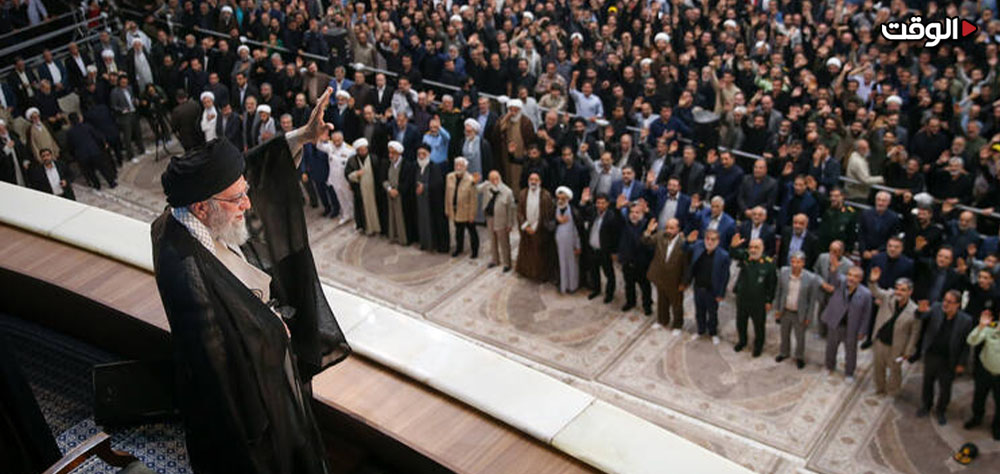
- Ayatollah Khamenei and Ghalibaf Review Latest Developments in US-Israeli War on Iran
- Source: Iran Ready for Full-Scale, Multi-Front War Against Adversaries
- Iran: US Political Targets Could Be Legitimate if Assassinations Resume
- Iranian FM Warns US of Greater Strategic Defeat Without Honorable Agreement
- IRGC Deputy Says Iran Prepared to Repel Any Attack by Adversaries
- Three Cases That Brought Pakistan’s Munir to Tehran
- Netanyahu’s Transition from Ben-Gurion Doctrine to His Own
- Iranian Security Chief Vows No Enriched Uranium Will Leave the Country
- Iran Warns of Threat to Hormuz Undersea Cables in Event of Infrastructure Attacks
- Israel’s Latest Gaza Attacks Kill At least Four Palestinians Amid Genocide Allegations
Editor's Choice
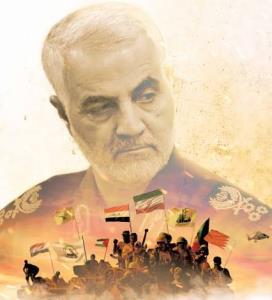
Gen. Solemani, A Living Resistance Legacy General Solemani of Iran caused a transformation to the region that blocked the way of the Israeli and American projects in West Asia.
A Review of Newly Published US National Security Document The US national security document may be an unwanted admission that the US hegemony is diminishing.
US or Venezuela? Who’s the True Oil Thief? Trump says Venezuelan nationalization of its oil was theft of American oil companies’ assets, justifying oil blockade on South American nation.
Why Are Tel Aviv and Washington Stepping Up Pressures against Hezbollah? Israel knows that disarming Hezbollah makes occupation of Lebanon a piece of cake.
Is Yemen on the Verge of Split? The country is sinking in chaos as conflicting forces in the south are going separate ways and Yemenis are less involved in the fate of the south.
News
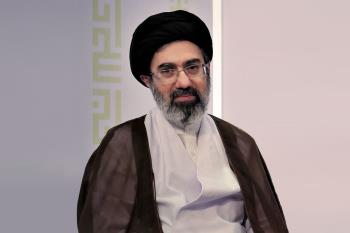
Ayatollah Khamenei and Ghalibaf Review Latest Developments in US-Israeli War on Iran
Ayatollah Seyyed Mojtaba Khamenei and Parliament Speaker Mohammad Bagher Ghalibaf held talks on the ongoing conflictSource: Iran Ready for Full-Scale, Multi-Front War Against Adversaries A senior security official said Wednesday that Iran is fully prepared for a large-scale conflict spanning multiple fronts as regional tensions intensify
Iran: US Political Targets Could Be Legitimate if Assassinations Resume An Iranian security official stated that American political figures could become legitimate targets if targeted killings of officials resume
Iranian FM Warns US of Greater Strategic Defeat Without Honorable Agreement Washington faces a choice between reaching a fair and honorable agreement with Tehran and risking a more severe strategic setback
IRGC Deputy Says Iran Prepared to Repel Any Attack by Adversaries The Islamic Revolution Guards Corps (IRGC) deputy for political affairs said Iran’s military is ready to counter any hostile action
Iranian Security Chief Vows No Enriched Uranium Will Leave the Country Iran’s top security official has firmly rejected transferring enriched uranium abroad, declaring that all nuclear material will remain within the country
Iran Warns of Threat to Hormuz Undersea Cables in Event of Infrastructure Attacks IRGC official Yadollah Javani warns submarine cables in Strait of Hormuz could be endangered by attacks on Iranian infrastructure
Israel’s Latest Gaza Attacks Kill At least Four Palestinians Amid Genocide Allegations At least four Palestinians have been killed in Israeli strikes on Gaza, further raising doubts about Israel’s commitment to a year-old ceasefire
France Tightens Curbs and Threatens Large-Scale Police Deployment Ahead of Demonstrations French officials have prolonged nighttime movement restrictions in Paris and several other major urban centers
Iranian Military Chief Vows Armed Forces Will Defend Nation in All Circumstances Iran’s senior military chief has affirmed that the country’s armed forces are fully prepared to safeguard national sovereignty and confront any threat
IRGC Warns Further Attacks on Iran Could Spark Worldwide Energy Crisis The Islamic Revolution Guards Corps (IRGC) cautioned that renewed attacks on Iran would provoke a far stronger retaliation
Araghchi: Tehran-Moscow Ties Vital for Regional Peace and Stability Iranian Foreign Minister Abbas Araghchi stressed that closer ties between Tehran and Moscow could contribute to greater regional stability
Iran Says It Has No Fundamental Disputes with Regional States President Masoud Pezeshkian said Monday that Tehran is willing to address outstanding concerns with neighboring countries through diplomatic talks
YAF Carries Out Six Operations Against Saudi Energy and Military Targets Yemen’s Armed Forces report six strikes on Saudi oil facilities, airports and military installations
Iran Warns US and Israel Against Further Miscalculations as Tensions Escalate Iran’s top military commander has delivered a stern warning to the leadership of the United States and the Zionist regime
Araghchi Warns US and Israel: Previous Attempt to Defeat Iran Only Made Us Stronger Iranian Foreign Minister Seyyed Abbas Araghchi cautioned Washington and Tel Aviv against launching another attack on the Islamic Republic
Russian Foreign Minister Lavrov to Arrive in Tehran Monday Iranian Foreign Ministry spokesman Esmaeil Baghaei announced that Russian Foreign Minister Sergey Lavrov is scheduled to visit Tehran on Monday
Iran Signals Capability to Strike Persian Gulf Internet and AI Infrastructure Iran has cautioned that regional data centers and undersea communications cables could become targets if further military action is launched
OIC Foreign Ministers Gather in Baghdad as Araghchi Arrives for Meeting Iranian Foreign Minister Abbas Araghchi arrived in Baghdad on Saturday
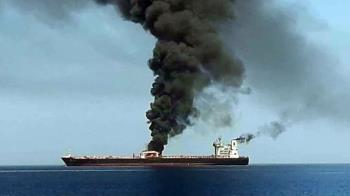
IRGC Navy Reports Second Supertanker Explosion Following Naval Mine Strike in Hormuz The IRGC Navy reported that another supertanker burst into flames after hitting a sea mine while attempting to pass through the Strait of Hormuz
Most Viewed
IRGC Deputy Says Iran Prepared to Repel Any Attack by Adversaries
Three Cases That Brought Pakistan’s Munir to Tehran
Iranian FM Warns US of Greater Strategic Defeat Without Honorable Agreement
Ayatollah Khamenei and Ghalibaf Review Latest Developments in US-Israeli War on Iran
Source: Iran Ready for Full-Scale, Multi-Front War Against Adversaries
Iran: US Political Targets Could Be Legitimate if Assassinations Resume
Iran Signals Capability to Strike Persian Gulf Internet and AI Infrastructure
OIC Foreign Ministers Gather in Baghdad as Araghchi Arrives for Meeting
Hormuz, Tehran’s Deterrence Lever against American Threats
Confiscating Hezbollah’s Explosives Shipment by Govt. a Dangerous Game
Behind Closed School Doors: Azerbaijan Govt. Secularism vs. Islamic Identity of Society
Iraqi PM’s Saudi Visit and Difficult Calculus of Neurality
What’s Lavrov’s Mission in Tehran?
Russian Foreign Minister Lavrov to Arrive in Tehran Monday
Khatibzadeh: Any Agreement Must Include Lebanon
Araghchi Warns US and Israel: Previous Attempt to Defeat Iran Only Made Us Stronger
IRGC Navy Reports Second Supertanker Explosion Following Naval Mine Strike in Hormuz
Iran Warns US and Israel Against Further Miscalculations as Tensions Escalate
YAF Carries Out Six Operations Against Saudi Energy and Military Targets
Araghchi: Tehran-Moscow Ties Vital for Regional Peace and Stability
Iran Says It Has No Fundamental Disputes with Regional States
Araghchi Calls on World to Hold US Accountable for ‘War Crimes’ at UNGA
Iran Rules Out Resuming Pre-War Diplomatic Track with US
Elections in Land of Crisis: Netanyahu, Opposition, and Architecture of Israeli Future
Iran Signals Readiness for Talks While Rejecting Pressure and Intimidation
Pezeshkian at UNGA: Iran Will Not Give in to US Pressure
Israel’s Opposition Coalition: A Final Nail in the Netanyahu’s Coffin?
Saudi Arabia Carries Out 26 Airstrikes on Yemen, Leaving Dozens Dead and Injured
Araghchi: Iran ‘Fully Prepared’ for Renewed War with US While Pursuing Diplomacy
Iran Flights Embargo and Test of Iraq’s Sovereignty
Minab School Reopens: Alwaght Reports from Bombed Iranian School
Leader Vows Knowledge, Morality Will Disarm Aggressors
Projectile Strikes Cargo Ship in Strait of Hormuz
Trump’s War against the World at UNGA
Araghchi Sets Out 7-Day Hormuz Reopening Plan Tied to US Compliance
The Yemen Sayyed Nasrallah Envisioned: From Resistance to Regional Transformation
In Focus
Ansarullah
A Zaidi Shiite movement operating in Yemen. It seeks to establish a democratic government in Yemen.
Shiite
represents the second largest denomination of Islam. Shiites believe Ali (peace be upon him) to be prophet"s successor in the Caliphate.
Resistance
Axis of Resistances refers to countries and movements with common political goal, i.e., resisting against Zionist regime, America and other western powers. Iran, Syria, Hezbollah in Lebanon, and Hamas in Palestine are considered as the Axis of Resistance.
Persian Gulf Cooperation Council
A regional political u n i o n consisting of Arab states of the Persian Gulf, except for Iraq.
Taliban
Taliban is a Sunni fundamentalist movement in Afghanistan. It was founded by Mohammed Omar in 1994.
Wahhabism & Extremism
Wahhabism is an extremist pseudo-Sunni movement, which labels non-Wahhabi Muslims as apostates thus paving the way for their bloodshed.
Kurds
Kurds are an ethnic group in the Middle East, mostly inhabiting a region, which spans adjacent parts of Iran, Iraq, Syria, and Turkey. They are an Iranian people and speak the Kurdish languages, which form a subgroup of the Northwestern Iranian branch of Iranian languages.
NATO
The North Atlantic Treaty Organization is an intergovernmental military alliance based on the North Atlantic Treaty which was signed on 4 April 1949.
Islamic Awakening
Refers to a revival of the Islam throughout the world, that began in 1979 by Iranian Revolution that established an Islamic republic.
Al-Qaeda
A militant Sunni organization founded by Osama bin Laden at some point between 1988 and 1989
New node

Paper
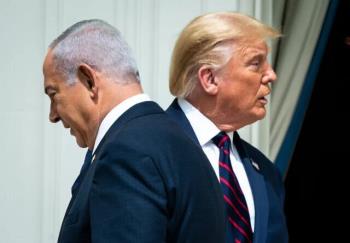
A Kiss of Guillotine of Time on Netanyahu’s Neck
Saturday 6 June 2026
launch missiles and on the other hand is Iran's record of threats that have materialized using force when its demands went ignored. Having been in the worst and toughest conditions and having worked hard to manage to persuade Iran to agree to the truce, Trump was well aware that if Israel attack ...
Paper
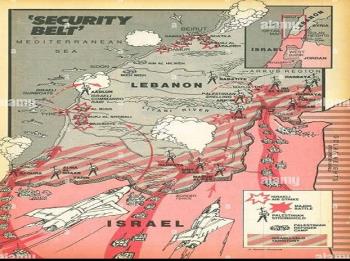
Security Belts from Lebanon to Syria: Objectives and Consequences of New Israeli Strategy
Thursday 25 June 2026
،
Satellite imagery also confirm massive and unannounced devastation outside the stated military zones, like Shejaiya neighborhood.
So control of 60 percent of this enclave under the push to create a security belt and buffer zones shows that Tel Aviv is redefining Gaza's political geography. Many ...
News
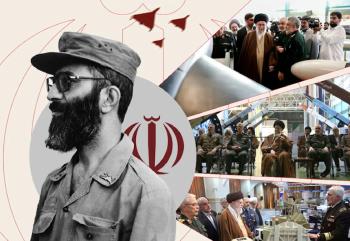
Iran’s Journey Under Ayatollah Khamenei: From Isolation to Strategic Influence
Friday 10 July 2026
،
launch in 2009 made Iran one of the few states with sovereign satellite-launch capability, followed by the Simorgh launcher, IRGC's military satellite track with Qased and Qaem-100, and record payload missions in 2024. On the nuclear front, Bushehr-1 became operational in 2013, while enrichment ...
News
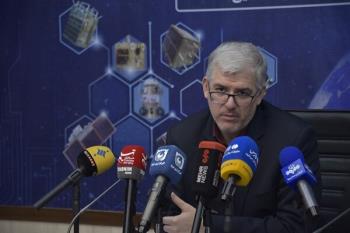
Rad-1 Radar Satellite Nears Unveiling
Wednesday 15 July 2026
،
launch was delayed from its original schedule earlier this year due to technical issues common in satellite development.
Salarieh said the unveiling of Rad-1 would mark a major milestone for Iran's space industry. He also revealed that work is already underway on Rad-2, a more advanced radar sa ...
Paper
From Red Sea to Black Sea: Geopolitical Impacts of Ukraine’s Attack on Iran’s Ship in Caspian Sea
Monday 27 July 2026
،
launched operations aimed at crippling Russia's ability to use its sea lanes. The next escalation extended those strikes to vessels sailing under neutral flags in the Black Sea, a signal that the risks of navigation were no longer confined to Russian-flagged ships.
But Zelensky’s own word ...
Paper
Shadow of Missiles Back on Saudi Oil Empire
Wednesday 29 July 2026
،
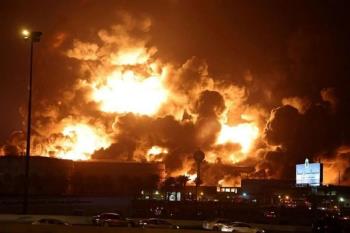
Satellite imagery published after the attack show that fire continues to burn in parts of this energy facility and thick smoke rises to the sky. Reuters reported that Aramco oil giant has taken out of service the 400-barrel-capacity Jazan oil refinery after Ansarullah attack. Parts of the facility, ...
Report
Countdown to US-Iran Deal Deadline: Returning to War or Continuing Diplomacy?
Friday 14 August 2026
،
Satellite imagery and assessments from Israeli and Western officials showed Iran reconstructing tunnel entrances, underground bases, and a number of damaged facilities.
The evidence, in short, suggests that Iran has restored portions of its damaged military capacity faster than anticipated, while s ...
Paper
Fifth Fleet: From Safe Base to Story of Loss
Tuesday 15 September 2026
،
launch and recovery systems.
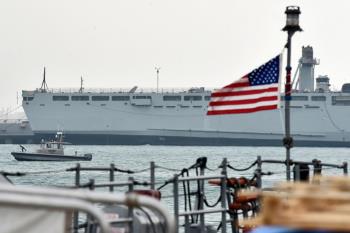
Earlier analyses based on media reports and satellite imagery had indicated that US facilities in Bahrain sustained significant damage during Iran’s attacks.
Admiral Daryl Caudle, the chief of naval operations, said in early September that the Navy would not resu ...
News
Iran Sets Sights on Launching Three Satellites by Year-End
Thursday 17 September 2026
،
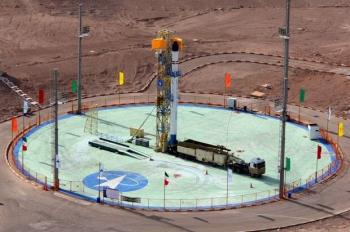
launch ALWAGHT- Iran is preparing to deploy three satellites from the Shahid Soleimani constellation in a single launch before the current Iranian year concludes on March 21, 2027.
Iranian Communications Minister Sattar Hashemi said the country is prioritizing its space industry, highlighting plans ...
News
Iran’s Pars-2 Satellite Set for Launch
Sunday 4 October 2026
،
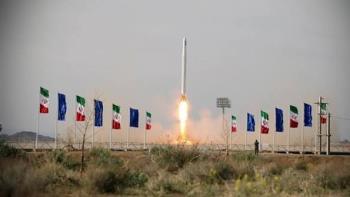
launch.
Iranian Space Agency chief Hassan Salarieh said the country has made significant advances in its space program in recent years, with major milestones achieved through cooperation among government bodies, universities, research centers and space-sector companies.
He highlighted the successf ...